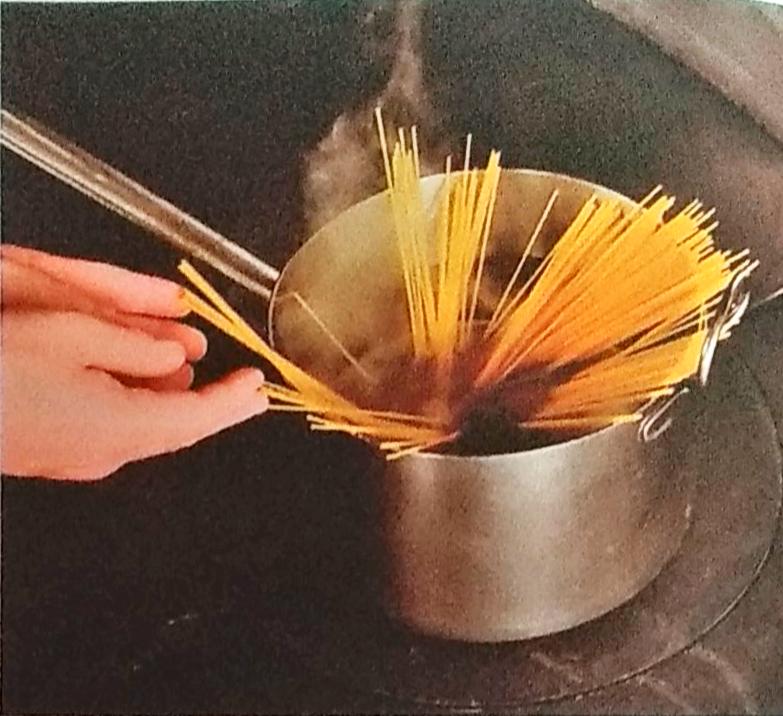
Method of Boiling
1.Place the food in boiling liquid. The liquid will stop boiling when you put the food in, so heat to bring it back to boiling. Then reduce the heat so that the liquid just bubbles gently (simmering) and cooks the food.
2.Cover food with cold liquid. Heat it up and bring it to the
boil, then reduce the heat to allow the food to simmer
What is it used for?
1.Cooking green vegetables -to retain maximum colour and nutritional value (when boiled for the shortest possible time)
2.Meat
3.Rice and pasta
4.Meat – to tenderise the fibrous structure
5.Root, pulses and other vegetables
6.Vegetable soups -to extract the starch
7.Stocks to extract flavour from the ingredients
Follow these guidelines when boiling food:
1/Ensure that all pieces of food going in the same pan are of a similar size or density so they need the same cooking time.
2.Foods that require different cooking times should not be cooked together. For example, the cooking time of potato is longer than that of
cauliflower. Choose pans that are the right size to allow for the food and the boiling water.
3.Use enough water to entirely cover the food throughout its cooking time. Use minimal amounts of water for green vegetables.
4.Make sure that there is enough boiling liquid in the before you add the food to avoid lowering the temperature. This helps maintain the vitamins and colour of green vegetables.
5.With meat and stock skim the surface of the liquid regularly during the cooking.
6.Simmer rather than boil vigorously so that less water evaporates, and the food will not shrink too much or break up.
There are also guidelines for boiling certain foods:
1.When you make stock, bring the ingredients to the boil from a cold start and skim off surface scum
regularly.
2.Pasta should not be overcooked but left slightly firm (called al dente).
3.Meat and poultry should be well cooked and tender
4.Vegetables should not be overcooked but left slightly crisp.
5.Tough meat must be cooked slowly so that there is time for the connective tissue to soften and change into gelatine. This dissolves in the cooking liquid and the fibres in the meat are released, making the meat tender. 1 this happens too fast, the meat
will be tough and stringy, Gentle heat will allow the protein to coagulate without hardening.
 Site Title