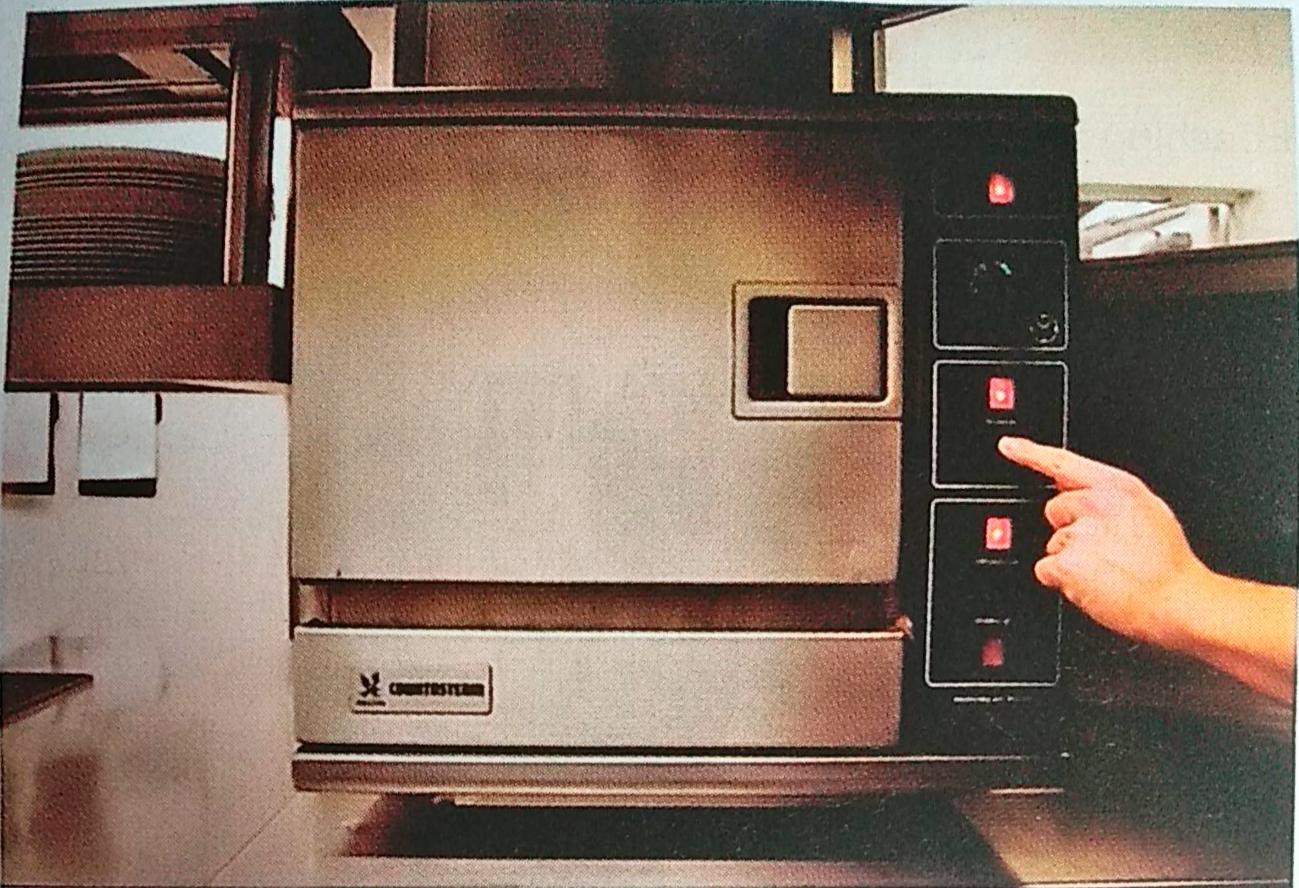
There are three main methods of steaming.
1.Atmospheric steaming – an atmospheric steamer is a closed ‘oven’ heated by steam generated by water boiling at the bottom. Food placed into the steamer is heated by direct conduction contact with the steam. They operate at normal atmospheric
pressure and cook a little above 100°C, For small quantities, food can be steamed by bowling water in the bottom of a saucepan and with food in perforated containers above the boiling water. The steam from the boiling water heats the container and
cooks the food inside it.
2.High-pressure steaming – this is done in high-pressure steamers working like pressure cookers. Steam in the sealed cooking chamber builds up pressure: high pressure produces higher temperatures, which makes the food cook faster.
A safety valve is used to control the pressure with maximum pressures pre-set , High-pressure steamers are also used for ‘batch’ cooking where small quantities of vegetables are cooked frequently throughout the service. This means the vegetables are always freshly cooked, keep their
colour, flavour and nutritional content.
3 Combination steaming – this is done in a combination (‘combi) oven. Dry heat and steam are combined in the oven, adding a little moisture to the food as it cooks. As water vapour is added to a convection oven that uses a fan, the steam is distributed evenly and quickly. Although still only at
100°C, it will cook the food more quickly than in a conventional oven.
when using steamer, timing and temperature are very important to make sure that the food is correctly
cooked.
a. Food cooks much faster in high pressure steamers so it can overcook very quickly.
b. When you are using a high pressure steamer, wait until the pressure gauge shows that it has reached a correct pressure before you open the door very carefully allowing some steam to escape before putting the food in. This means that the steamer will be at the correct cooking temperature, and the food will cook efficiently
c. Cooking times will vary according to the equipment used and the food to be steamed. It is essential that manufacturers’ instructions are followed correctly.
The following notes apply to particular steamed dishes:
1. The natural juices that result from steaming fish can be served with the fish or used to make the accompanying sauce.
2. For meat or sweet steamed puddings, grease the basin before filling it. Make sure it is covered with
greased greaseproof or silicone paper and foil to prevent moisture getting in and making the pudding soggy.
Steamers need to be cleaned and maintained, according to these guidelines:
1. Before use, check that the steamer is clean and safe to use. Report any fault immediately.
2. Steamer trays and runners should be washed in hot detergent water, rinsed and dried. Where applicable, drain, clean and refill the water-generating chamber. Door controls should be lightly greased occasionally. Leave the door slightly open to allow air to circulate when the steamer is not in use.
3. Clean metal steamer trays and containers thoroughly using hot detergent water, rinse, then dry with kitchen paper/clean cloth.
Health and safety
The steam in steamers can be very dangerous as it is extremely hot and can cause serious burns and scalds. To avoid injuring yourself:
a. Make sure you are trained in how to use steamers and use them with great care.
b. Check the pressure in high-pressure steamers continually.
c. Allow the pressure to return to the correct level before operating doors or removing pressure cooker lids.
d. Allow time for the pressure to return to normal before opening commercial steamers. Then stand well away from the door as you open it, to avoid the full impact of the escaping steam
 Site Title